

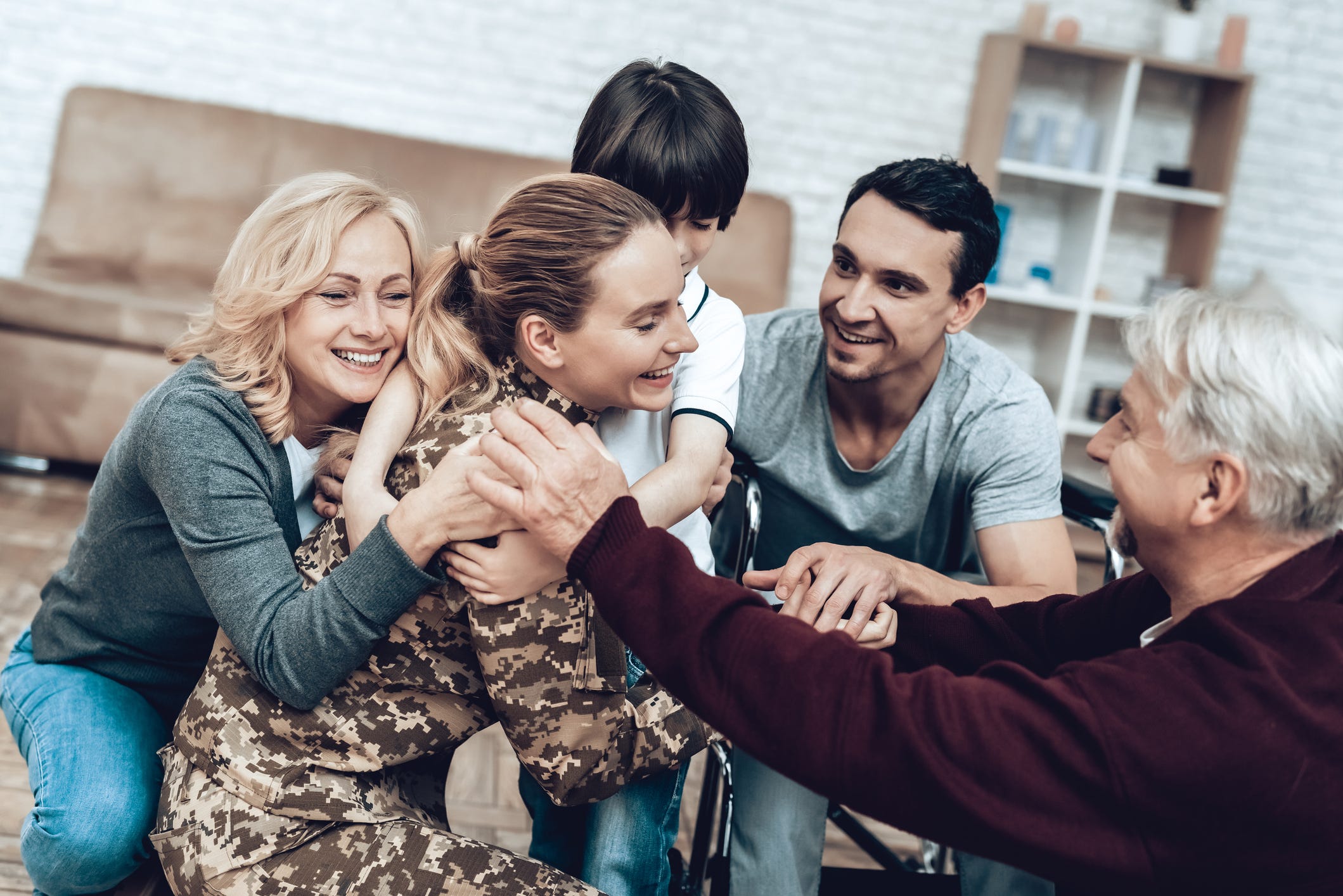
There is a particular kind of quiet that settles in about a year after the crisis passes.
The casseroles stopped arriving months ago. The phone calls thinned out. The friends who showed up in the first hard weeks have, understandably, returned to their own lives. And the veteran who once stood at the edge of something terrible — who was noticed, reached, and pulled back — now sits at a kitchen table on an ordinary Tuesday afternoon, and the house is silent.
This is the part nobody warns you about. Not the emergency. The aftermath.
We wrote in our last letter about Standing Watch — about how a trained neighbor can recognize a veteran in crisis and guide them toward help before the worst happens. That work is urgent, and it saves lives. But preventing a death is the floor, not the ceiling. Keeping someone alive on Monday means very little if we abandon them to the silence of every Tuesday that follows. The watch doesn’t end when the immediate danger lifts. In many ways, that’s when the longer, quieter, more human work begins.
June is PTSD Awareness Month. We’d like to spend it moving past awareness and toward something more useful: understanding, and then accompaniment.
What We Talk About When We Talk About PTSD
Post-traumatic stress disorder carries a heavy reputation, much of it earned in the wrong way. Popular culture has handed us a caricature — the volatile veteran, the ticking time bomb, the one who can never quite come home. It’s a story that frightens people, and frightened people keep their distance. Which is precisely the opposite of what healing requires.
So let’s replace the caricature with what the research actually shows.
PTSD is real, and those who served carry it more often than the rest of us do. At any given time, about one in twenty veterans is living with it — and among those who saw the heaviest fighting in Iraq or Afghanistan, closer to one in seven. It doesn’t fall evenly. Younger veterans bear more of it, as do women who served and those already reaching out to the VA for help. But these aren’t really numbers. Behind every one of them is a person who wakes up carrying something most of us were spared — a weight that never shows on the outside.
But here is what the caricature gets catastrophically wrong. PTSD is not a character flaw, and it is not a life sentence. It is an injury — a wound the mind sustains when it survives something the body was never built to absorb. When a soldier shatters a leg, we don’t call them broken beyond repair. We set the bone, we support the healing, and we walk alongside the recovery. The wounds we cannot see deserve no less.
PTSD is not a character flaw, and it is not a life sentence. It is an injury.
The Statistic That Changes Everything
If you take one number away from this letter, let it be this one.
For more than a decade, the most comprehensive long-term study of American veterans has been asking a quiet, almost startling question: Did anything good grow out of what you endured? When researchers first asked, about half of those who had lived through trauma said yes — they could name real, lasting growth on the far side of it. Ask the same question of veterans today, and that number has climbed to nearly two in three. And among those carrying the heaviest burden — the veterans struggling with PTSD itself — it runs higher still: roughly seven in ten a decade ago, and today, nearly nine in ten.
Read that again, because it overturns nearly everything the caricature taught us. The veterans struggling most with trauma were the most likely to report that the struggle had reshaped them in profound and positive ways: deeper relationships, renewed purpose, a hard-won clarity about what actually matters.
Researchers call this post-traumatic growth. It does not erase the pain, and it is not the same as “getting over it.” It is something stranger and more hopeful — the capacity of a person to be remade, rather than merely damaged, by what they’ve survived. And it is not the rare exception we’ve been led to expect. Most veterans turn out to be far more resilient than the headlines ever let on. Even through the hardest, most disrupted years in recent memory, more than eight in ten came through without lasting psychological harm. Trauma is real. Resilience is also real. And for most veterans, the second is the larger story.
This is not a reason to look away from suffering. It is a reason to lean in. Because growth, the research is clear, does not happen in isolation. It happens in connection.
Trauma is real. Resilience is also real. And for most veterans, the second is the larger story.
Why the Silence Is So Dangerous
Here is the hard part, and we’d be doing veterans a disservice to soften it.
The growth doesn’t arrive on its own. It needs conditions. And the single most corrosive condition for a wounded veteran is the one we described at the start — the silence that descends once the acute crisis has passed and everyone assumes the work is done.
A veteran leaving service often loses, all at once, the things that held a life together: the mission, the tribe, the rank that told the world who they were, the structure that ordered every waking hour. We tend to treat that as a logistics problem — find a job, get the benefits sorted, fill out the forms. But it is something far deeper. It is the loss of belonging. And no amount of paperwork fills that particular hole.
When we, the community, go quiet, we don’t just leave a veteran alone. We confirm the lie that trauma whispers: you are a burden, you are separate, the world has moved on without you. The silence after a crisis can be every bit as dangerous as the crisis itself, precisely because it is so easy to mistake for peace.
You are not powerless here. That silence is not inevitable. It is a choice we make, one quiet afternoon at a time — and it is a choice we can unmake.
What Community Can Actually Do
Communities do not cure PTSD. Let’s be honest about that. We are not therapists, and we should never pretend to be. What we can do is reshape the conditions in which healing becomes possible — and on that front, ordinary neighbors hold extraordinary power. Here’s the part that should hearten every one of us: the things that protect a struggling veteran most are not found in a clinic. They are purpose, connection, and belonging. We may not be able to treat an injury we can’t see — but we can offer the very things that, time and again, matter most. Here is what that looks like in practice.
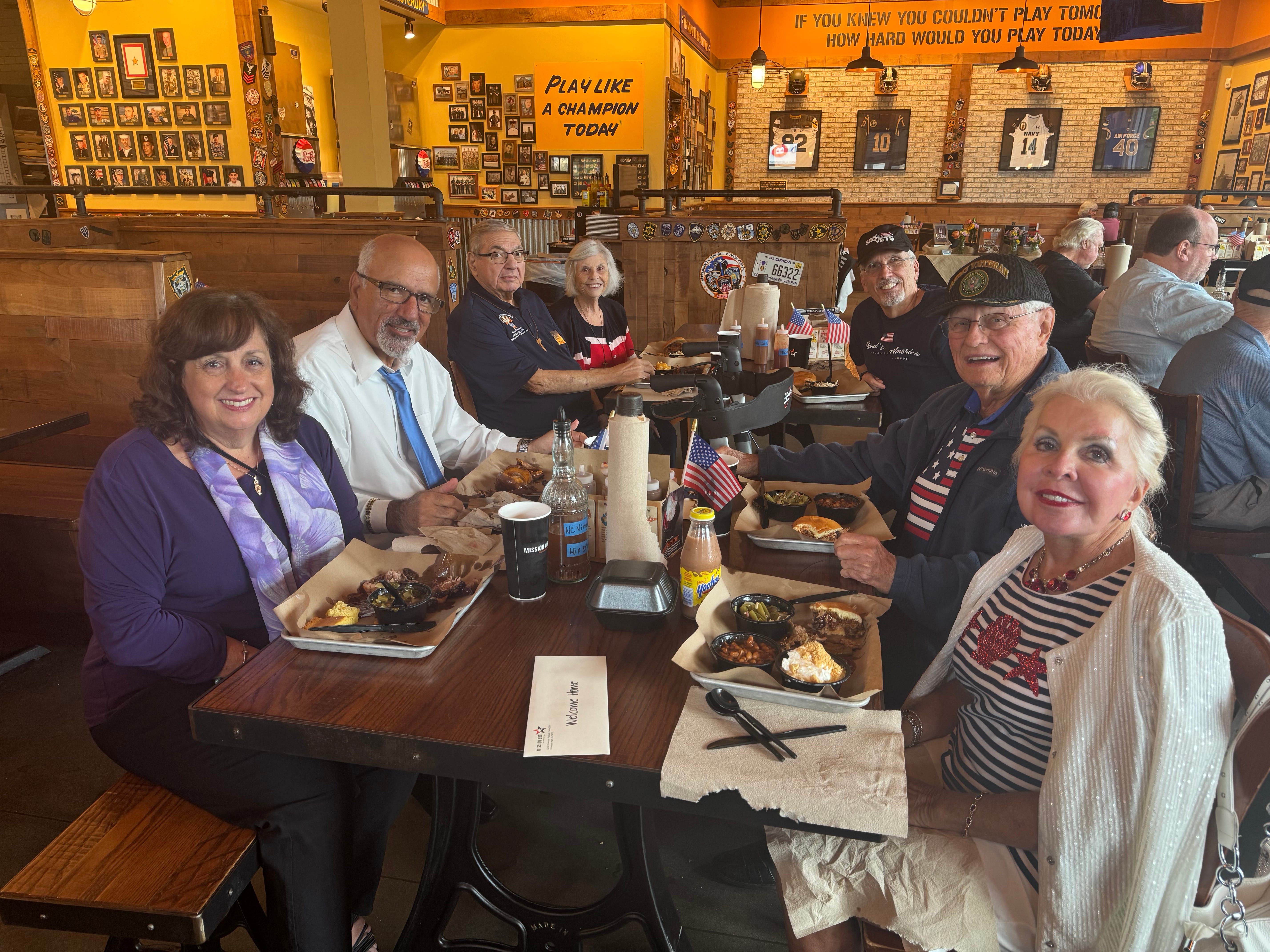
Veterans gathered around the table at Mission BBQ, beneath a wall of those who served. Belonging gets rebuilt in ordinary afternoons like this one.
Tell the truth, and don’t look away. A veteran wrestling with trauma can spot condescension and pity from across the room, and wants neither. What helps is honesty without flinching — a friend who can hear something hard and stay in the room, who treats them as capable rather than fragile. You don’t need the perfect words. You need to be willing to stay when the conversation gets uncomfortable. Presence beats advice nearly every time.
Be patient with a road that doesn’t run straight. Healing is not a tidy upward line. It loops, stalls, doubles back. A good month does not mean the work is finished, and a bad week does not erase the progress. The people who matter most are the ones who stay through both — who understand that showing up on the hundredth ordinary Tuesday is worth more than showing up once for the emergency.
Presence beats advice nearly every time.
Give them something worth doing. Of everything that protects veterans, a sense of purpose may be the strongest force of all — and few things rebuild it faster than being needed again. Veterans served with a mission and a role; the loss of both is part of what makes coming home so hard. So hand one back. Ask them to lead the project, anchor the crew, mentor the newcomer, carry something real. Not busywork — genuine responsibility. Purpose isn’t a luxury in this work. It’s the medicine.
Make belonging a habit, not a one-time invitation. The most healing thing you can extend is rarely a referral. It’s a standing place at the table. Come to dinner — and come back next week. Join the work crew. Sit with us on Sunday. Belonging isn’t built in a single gesture; it’s built in the ordinary rhythm of being expected somewhere, again and again, until showing up stops feeling like a question. And if they decline the first time, ask again. The invitation itself is part of the medicine.
Be a bridge to help — not a substitute for it. This is where knowing our limits saves lives. Many veterans who are struggling are not connected to professional care, and a good number never have been. We can’t be their counselors, but we can be the trusted person who knows the number, who offers to make the call together, who drives them to that first appointment, and waits in the parking lot. Sometimes the most important thing a neighbor ever does is walk a veteran the last few steps toward the help they’ve been carrying alone.
A Word to Our Faith Communities
There is a finding in that veterans’ study we haven’t mentioned yet, and it speaks directly to those of us who gather in churches and parishes.
Among all the factors the researchers measured, a veteran’s intrinsic faith — a living, interior spiritual life — stood out twice over. It was among the qualities most strongly tied to post-traumatic growth. And, on its own, regular participation in religious life lowers the risk of suicidal thinking, depression, and problem drinking — which means a faith community is not only a place where veterans heal, but one of the few places shown to help keep them alive. This should not surprise us. Faith traditions have always known how to hold suffering without trying to explain it away, how to find meaning in the valley rather than only on the mountaintop. Scripture tells us to bear one another’s burdens, and that there is no greater love than to lay down one’s life for a friend. Veterans understand that second part in their bones. Our task is to live out the first.
A faith community offers something the clinic cannot: a place where a wounded person is known by name, expected each week, and folded into a story larger than their own pain. That is not a small thing. For a veteran who has lost their tribe, a congregation can become a new one. The pew next to yours may be the most important seat in the room.
From Standing Watch to Walking Alongside
So we return to where we began — to that silent kitchen on an ordinary Tuesday.
The watch we keep is not only for the night of the crisis. It extends into all the quiet days afterward, when the danger is invisible, and the temptation to look away is strongest. Standing watch teaches us to notice. The longer work asks something more of us: to stay. To move from noticing to accompanying. From prevention to belonging.
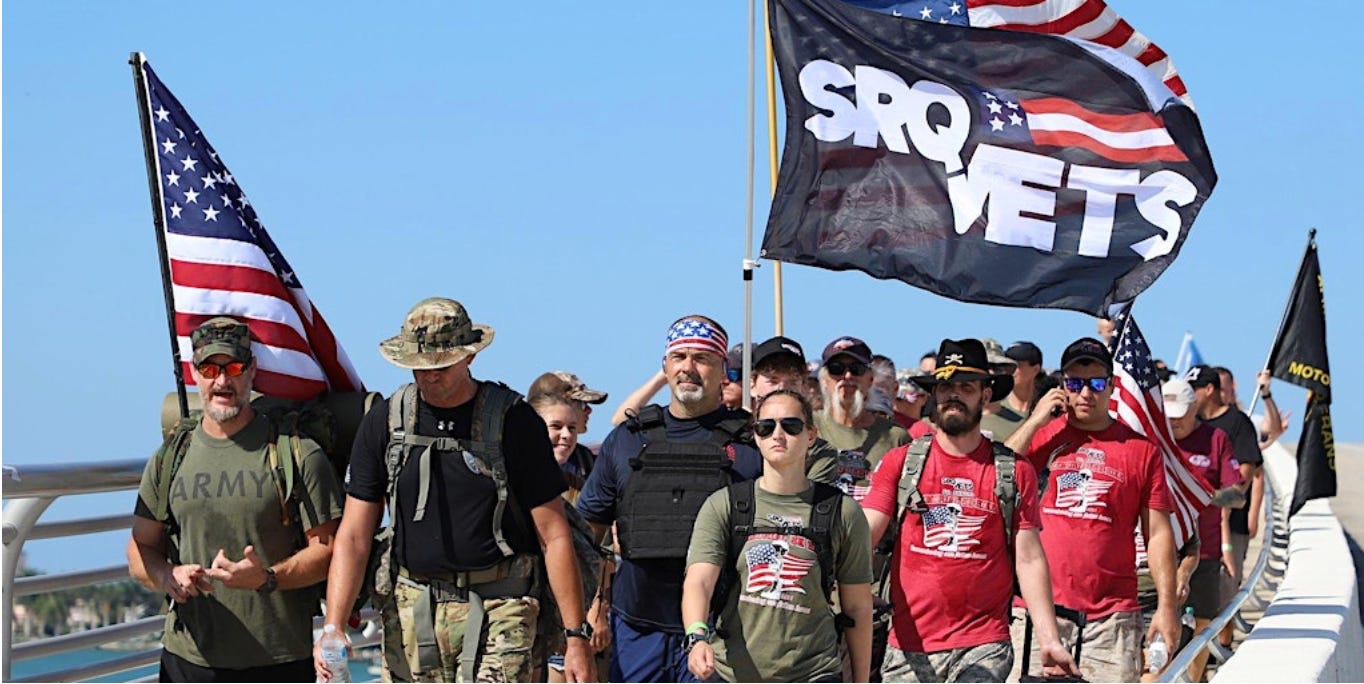
Community members and veterans on the SRQ Vets Memorial Day hike. The road home is long — and the point is that no one walks it alone.
Here in Azario, we made a commitment to our veterans, and a commitment is not a single act — it’s a posture we hold over years. We will keep training neighbors to recognize a veteran in crisis. We will also keep showing up on the hundredth Tuesday, because we now understand that both matter, and that the second is where resilience is quietly built.
The veterans among us are not broken. They are changed — and that change, given the right soil, can grow into a wisdom the rest of us would be lucky to learn from. Whether it grows depends, in no small part, on us. On whether we choose presence over distance, patience over urgency, and belonging over silence.
The watch continues. The question is whether we’ll stand it together.
The veteran mental health and resilience findings in this article are drawn from the National Health and Resilience in Veterans Study (NHRVS) — the most comprehensive nationally representative, longitudinal study of U.S. veterans, conducted by the VA National Center for PTSD and Yale University under the direction of Dr. Robert H. Pietrzak. The post-traumatic growth figures track two waves of the study: an earlier cohort (reported in Frontiers in Psychiatry, 2020) and the most recent 2019–2020 cohort (Psychiatric Quarterly, 2023). Other figures reflect the 2019–2020 cohort, with follow-up through 2022.
Neighbors in Service is a community of veterans, military families, and those who support them. To learn how you can stand watch alongside us — through Watch Stander training, our community programs, or simply by showing up — reach out at info@neighborsinservice.org or visit neighborsinservice.org.
If you or a veteran you know is in crisis, the Veterans Crisis Line is available 24/7. Dial 988, then press 1.